Concept and Vision
Living in Los Angeles, we witness firsthand that homelessness affects everyone. Beyond the immeasurable human suffering, it profoundly impacts neighborhoods, communities, and the long-term stability of our city. We believe this is not an unsolvable problem, but one that requires vision, compassion, and bold, integrated solutions.
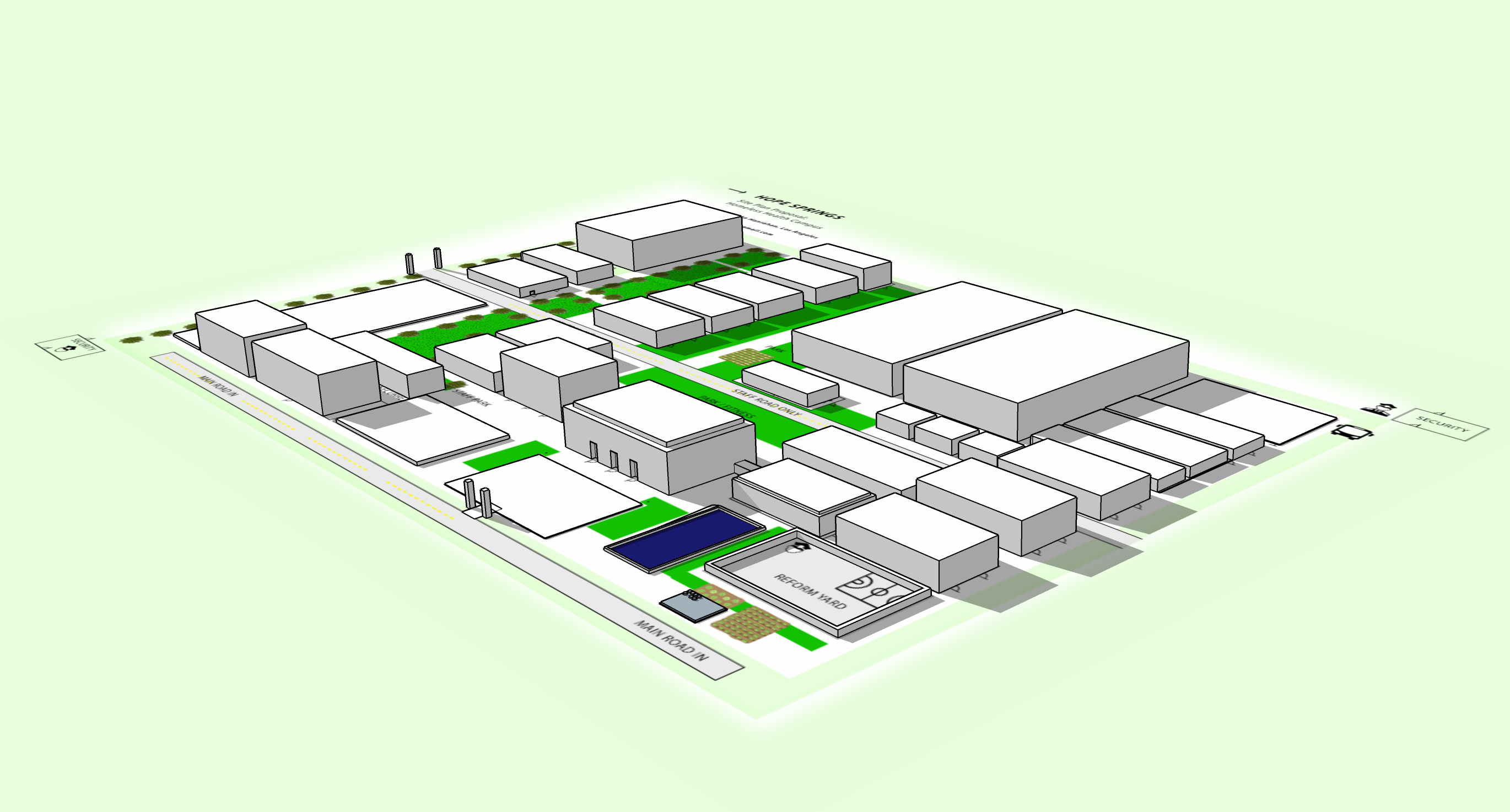
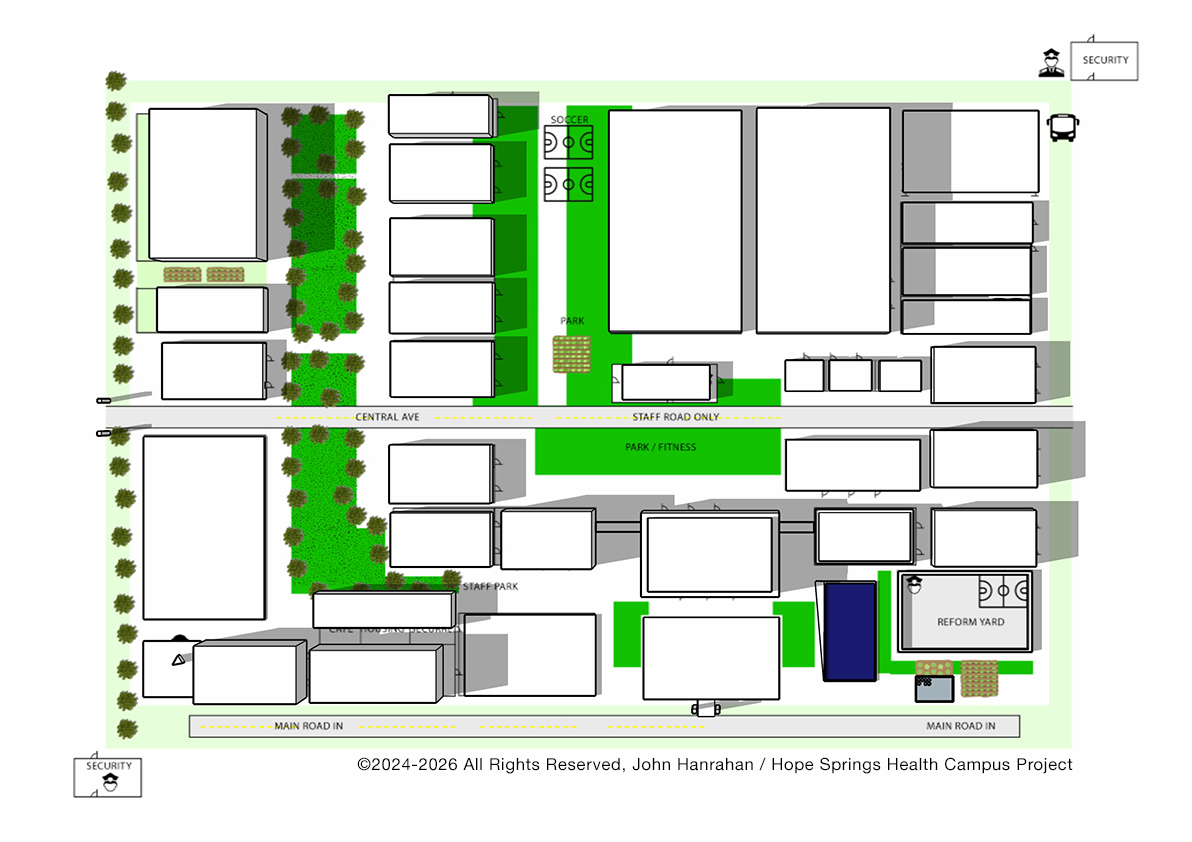
Hope Springs is a proposed 200-acre health campus designed to address homelessness through architecture, infrastructure, and systems design. The campus brings together housing, healthcare, rehabilitation, education, transportation, and employment within a single unified environment. By integrating these essential systems, Hope Springs seeks to create a sustainable pathway toward stability, dignity, and long-term recovery.
Rather than fragmented services, Hope Springs proposes a complete ecosystem where residents can access the resources necessary to transition toward independence within a cohesive and supportive environment.
Infrastructure and Design
Designed to support up to 25,000 residents, the campus provides safe housing, therapeutic services, job training, and community infrastructure. The architectural framework incorporates sustainable construction methods, including aircrete and fiberglass rebar, to reduce cost, increase durability, and improve long-term resilience.
The modular construction approach allows the campus to be built efficiently while maintaining flexibility to adapt to evolving community needs.
Purpose and Impact
Hope Springs represents a systems-level approach to addressing one of the most complex social and urban challenges facing Los Angeles. By combining housing, healthcare, and economic opportunity into a single integrated campus, the project proposes a scalable model capable of transforming how cities approach recovery and rehabilitation.
The project reflects a broader commitment to applying architecture, design, and engineering toward meaningful social impact.